Smart home integratie: home automation system
Een zelf gebouwd home automation system met Home Assistant, HomeLogic, MQTT, custom hardware en geïntegreerd energiebeheer.
Achtergrond
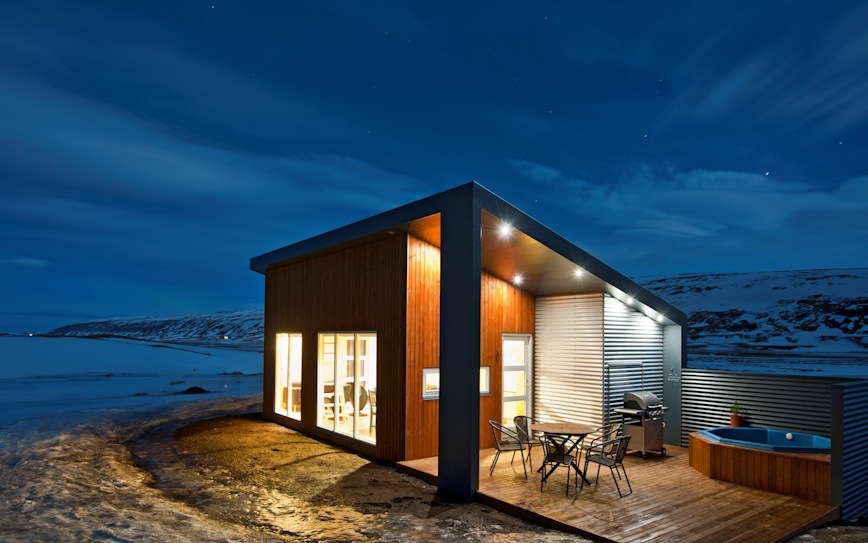
Jarenlang wilde ik een energiezuinig en grotendeels zelfvoorzienend huis ontwerpen en bouwen met geïntegreerde home automation. In plaats van te vertrouwen op complexe kant-en-klare smart home systemen, wilde ik een systeem bouwen dat betrouwbaar, eenvoudig en praktisch is in dagelijks gebruik, zonder afhankelijkheid van cloudservices.
Vanaf de ontwerpfase van het huis is de automatisering mee ontworpen met het gebouw zelf. De meeste sensoren en apparaten zijn bekabeld, zodat het systeem minder afhankelijk is van draadloze verbindingen en alle bekabeling netjes in de constructie weggewerkt kon worden.
Belangrijke ontwerpprincipes:
- het huis moet veilig kunnen functioneren zonder home automation
- geen afhankelijkheid van cloudservices of permanente internetverbinding
- eenvoudig en intuitief voor dagelijks gezinsgebruik
- niet opdringerig en zonder onnodige afleiding
Het Home Automation System
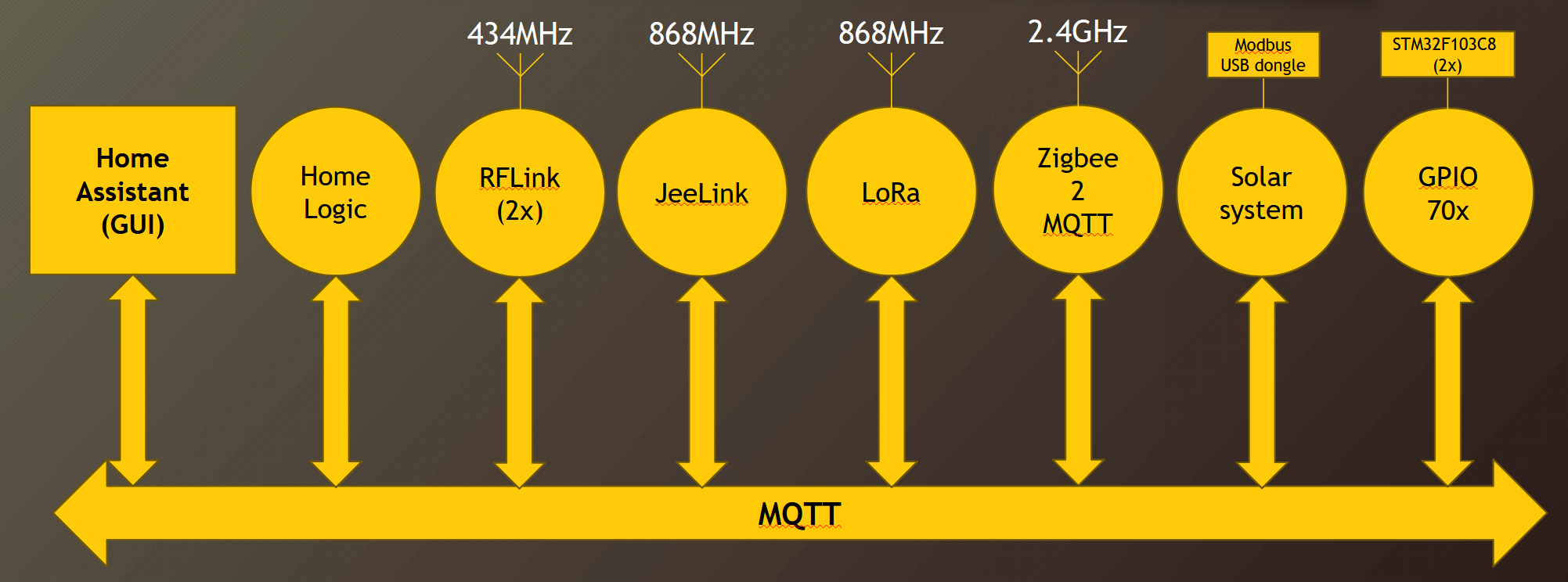
Mijn home automation system is opgebouwd rond twee hoofdcomponenten: Home Assistant voor de gebruikersinterface en HomeLogic als centrale automation engine. HomeLogic is een event-driven logic system waarin alle automatiseringslogica wordt uitgevoerd.
De communicatie tussen Home Assistant en HomeLogic loopt via MQTT. Dat is de primaire messaging layer in het systeem.
Externe apparaten worden gekoppeld via protocol- en device-specifieke gatewayservices. Sommige services draaien op meerdere fysieke locaties om radiodekking en betrouwbaarheid te verbeteren.
Systeemarchitectuur
Het systeem draait verspreid over meerdere Linux-servers:
- Infrastructure + Home Assistant
- HomeLogic Engine
- I/O Server
- Outbuilding server
Op deze servers draaien Home Assistant, HomeLogic en verschillende integratieservices voor:
- RFLink (2x)
- JeeLink
- LoRa
- Zigbee
- ADL3000 3-fase energiemeter
- Tesla
- GPIO controllers (2x)
Deze modulaire opbouw isoleert fouten, maakt debugging eenvoudiger en maakt het mogelijk om nieuwe functionaliteit toe te voegen zonder het hart van het systeem aan te passen.
Security en alarmsysteem
Alle ramen, deuren en ruimtes, inclusief het bijgebouw, hebben sensoren. Het alarm ondersteunt meerdere modi:
- Uit
- Thuis
- Nacht
- Afwezig
De modus wordt automatisch gekozen op basis van aanwezigheid, beweging en de locatie van mobiele telefoons, maar kan ook handmatig ingesteld worden. Rookmelders zijn geïntegreerd en activeren een centraal alarm.
Extra contextlogica maakt het systeem praktischer:
- waarschuwingen als ramen of deuren te lang openstaan terwijl het buiten koud is
- waarschuwingen bij een open dakraam tijdens regen of harde wind
- badkamerluchtvochtigheid-meldingen zodra ventilatie niet meer nodig is

Verwarmingslogica
Vloerverwarming en boilerverwarming worden aangestuurd via het Home Energy Management System (Home EMS).
Los van het EMS zorgt HomeLogic ook voor vorstbeveiliging in:
- de werkplaats
- de schuur
- de kelder
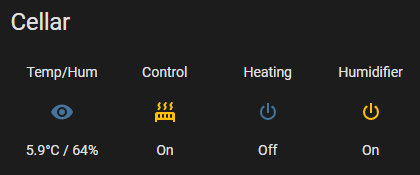
De kelder heeft een eigen regeling om temperatuur en luchtvochtigheid optimaal te houden voor winteropslag van fruit.
Weermonitoring
Een lokaal weerstation meet continu:
- temperatuur
- luchtvochtigheid
- luchtdruk
- windsnelheid en windrichting
- neerslag
Een forecast-algoritme analyseert trends en geeft vroegtijdige waarschuwingen bij extreme omstandigheden. Alle weerdata wordt via MQTT beschikbaar gemaakt voor andere automatiseringen.
Water en hydrauliek
Hot tub en zwembad
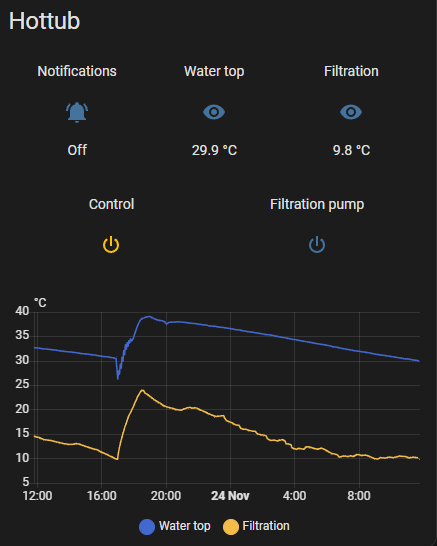
Het systeem bewaakt temperatuur, filtratie en bedrijfscondities. De automatisering bevat:
- slimme filtratie voor waterkwaliteit
- vorstbeveiliging voor het filtersysteem
- gerichte waarschuwingen wanneer dat nodig is
- automatische watermenging tijdens het opwarmen van de hot tub voor betrouwbare temperatuurmetingen
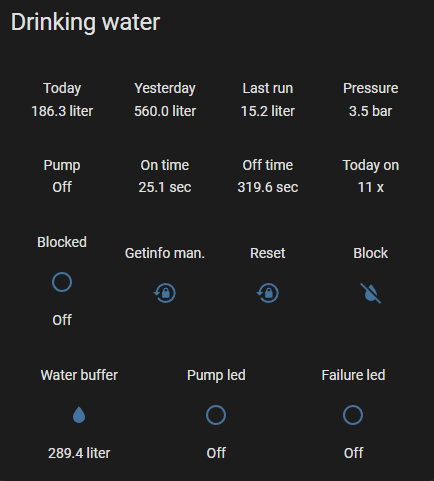
Drinkwatersysteem
Ook de huishoudelijke watervoorziening wordt bewaakt:
- drukregeling via pomp en drukvat
- monitoring van waterverbruik
- detectie wanneer het drukvat bijgevuld of vervangen moet worden
- waarschuwingen bij ongebruikelijk hoog waterverbruik
- leidingbreukbeveiliging door detectie van extreme flow
Dit beschermt zowel de pomp als het watersysteem als geheel.
Home EMS
HomeLogic bevat ook het Home EMS, een gespecialiseerd subsysteem voor intelligent energiebeheer. De belangrijkste doelen zijn het maximaliseren van eigen verbruik van zonne-energie en het minimaliseren van netverbruik.
In het kort doet het EMS:
- monitoring van alle energiebronnen en apparaten
- prioriteitsgestuurde aansturing van apparaten zoals autolader, boiler en zwembadverwarming
- planning op basis van energie en prijs
- optimalisatie van verwarming
- batterijmanagement
- fasebalancering
Meer details staan in Home EMS.
Stabiliteit en betrouwbaarheid
Hoge uptime wordt bereikt met verschillende watchdog-mechanismen:
- SystemWatch monitort alle services op alle servers en herstart ze indien nodig
- BoardMonitoring bewaakt temperaturen, geheugen en schijfruimte
- ThreadWatch controleert of alle HomeLogic-threads draaien en herstart HomeLogic indien nodig
- BatteryCheck geeft een dagelijkse samenvatting van sensoren met lage batterijspanning
Dit vermindert handmatig onderhoud en helpt het systeem zelfstandig herstellen bij storingen.
Notificaties en remote commands
Alle waarschuwingen en statusmeldingen lopen via Telegram. Als Home Assistant onbereikbaar is, werkt Telegram ook als fallback command interface voor kritieke functies.
Custom hardware en firmware
Het systeem bevat custom hardware voor specifieke behoeften:
- GPIO interface board voor digitale inputs en relaisaansturing
- LoRa Gateway voor koppeling van LoRa-sensoren
- LoRa zwembadverwarmingsboard voor SSR-aansturing en temperatuurmetingen
- LoRa weerstationhardware en firmware
- Universal Low-Power LoRa Sensor
Universal Low-Power LoRa Sensor
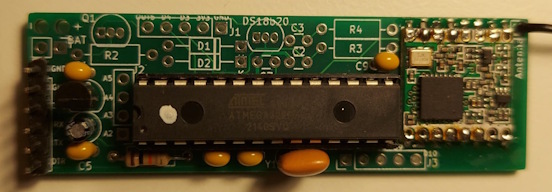
Ik ontwikkelde een universele low-power LoRa-sensorprint met:
- ATmega328P microcontroller
- RFM95W LoRa radio
- temperatuurmeting
- schakelinputs
- relay / SSR control outputs
- 18650 Li-Ion batterijvoeding
- programmeerbaarheid zoals een standaard Arduino Pro Mini
Met een verbruik van slechts 5.3 µA kan de print in typische omstandigheden tot ongeveer drie jaar werken op een enkele batterijlading. Deze sensoren maken monitoring en aansturing mogelijk op plekken waar bekabeling onpraktisch is.
Meer details staan in Universal Low-Power LoRa Sensor.
Een geïntegreerd en betrouwbaar home automation system
Alle onderdelen, van klimaatregeling en beveiliging tot zwembadfiltratie, waterdruk, energiebeheer en lokale weermonitoring, werken samen als een geheel. Door custom hardware en software, low-power sensoren, watchdogs en een robuuste MQTT-infrastructuur functioneert het huis als een geïntegreerd en betrouwbaar systeem.
Zelfs bij een grote storing kunnen belangrijke subsystemen onafhankelijk blijven functioneren, zodat essentiele functies veilig en betrouwbaar blijven.