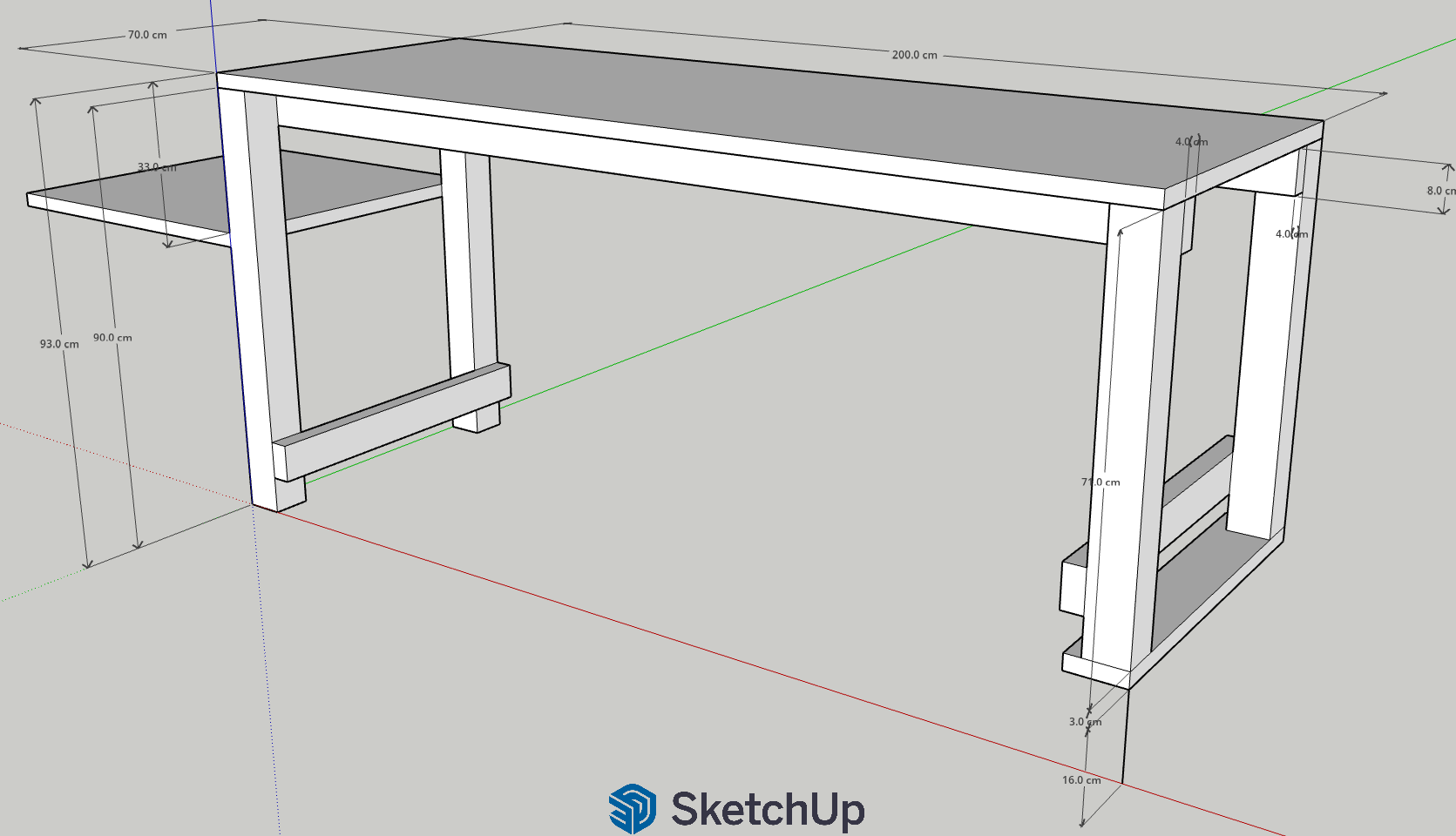
Overview
I use SketchUp to directly turn ideas into ready-to-build projects. The focus is not on nice pictures, but on functional designs that can be used immediately for construction, fabrication, or 3D printing. My workflow is all about accuracy, real-world dimensions, and catching design flaws early.
On this page, you’ll find a collection of practical SketchUp models that cover a wide range of topics, also reachable from the table of contents.
House Design
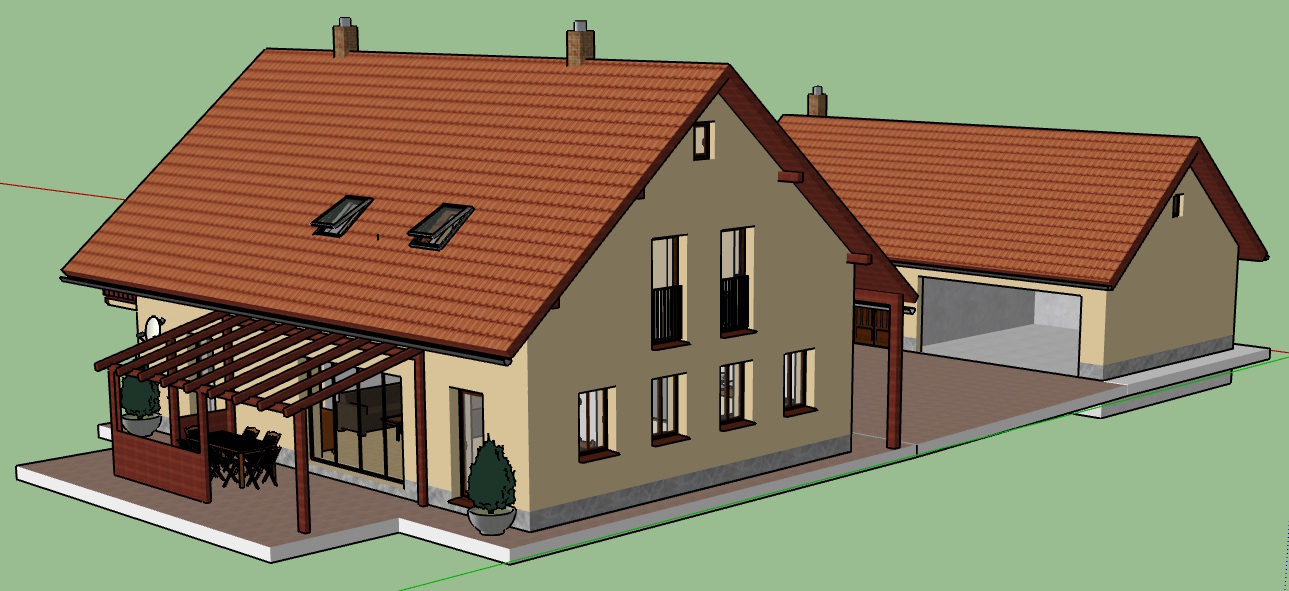
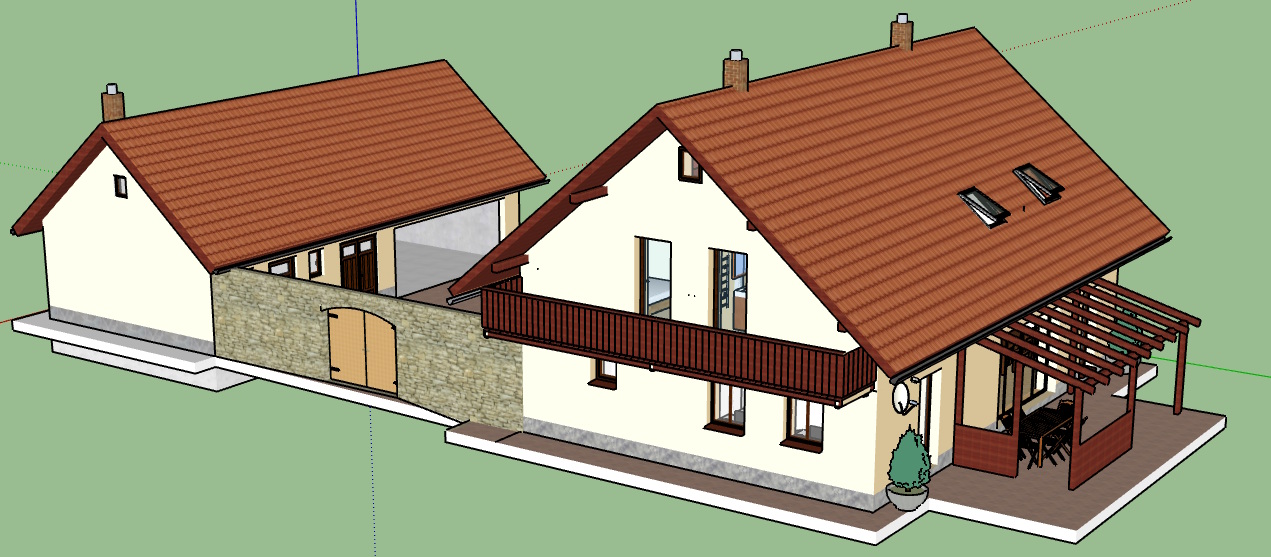
I fully modeled our house in SketchUp as the technical foundation for the actual construction drawings. This was not a visual concept model, but a dimensionally accurate engineering model used for practical decision-making.
The model was used, among other things, to:
- Define structural layouts and floor plans
- Validate spatial clearances and furniture fits
- Calculate floor, ceiling, and wall areas for painting or flooring
- Plan positioning of sockets, UTP outlets, lighting, motion sensors and cameras
- Design cable routing and technical installation paths
- Evaluate facade and interior material options in relation to light and space
- Perform basic heat loss estimations per construction element (walls, roof, glazing) to size the heating system
The model required a high level of precision because it directly influenced real-world building decisions. It helped detect design conflicts early and significantly reduced the risk of costly construction errors.
In addition, the model was geo-referenced to the real-world location, allowing evaluation of building orientation, sunlight exposure and shadow impact.
Garden Pavilion
I designed and built a garden pavilion for sheltered outdoor seating. The design was based on round timber beams, which added complexity compared to standard square construction lumber.
Key aspects of this project:
- Determining the best way to construct the pavilion using round timber beams.
- Visualizing the result before construction.
- Ensuring sufficient clearance under the front beam for walking.
- Calculating the precise roof angle and the exact length of the beams upfront.

3D Print Designs
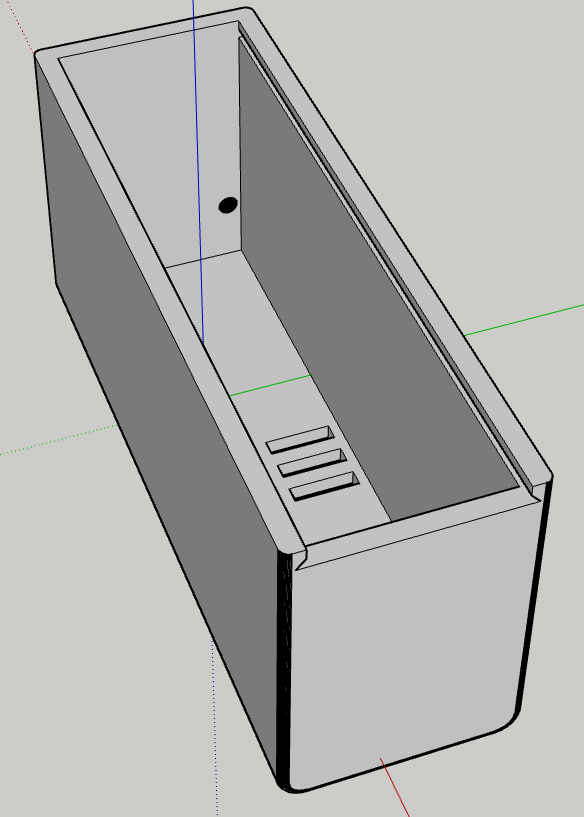
SketchUp is also used to design functional parts for 3D printing. These designs require extreme attention to detail to ensure real-world reliability.
Examples include:
- Custom repair solutions for various items
- Weather station components
- Sensor housings (e.g., LoRa sensor projects)
Key requirements for these designs:
- Printer tolerances
- Material behavior
- Assembly methods, such as snap-fits and sliding covers
The ultimate goal is to create parts that work reliably and fit perfectly in the real world application.
Custom Workbench
I designed a heavy-duty wooden workbench with an integrated saw table system. The model focused on ergonomics, structural rigidity, and practical workshop flexibility.
Design considerations:
- Optimized working height and depth for prolonged use
- Reinforced frame design for heavy tools
- Portable construction to allow indoor and outdoor use
- Foldable saw table support aligned with the main work surface
This project combines structural woodworking and machine integration, with SketchUp used as a technical planning tool to check clearances, and optimize usability before construction.